



Ideas on The Future of AI & Business
Artificial intelligence has moved from research labs into classrooms, businesses, and homes at an astonishing pace. What was once theoretical is now practical: students use AI to study, businesses automate workflows, and everyday people converse with machines as naturally as with a friend. But where is it all heading?
Two leading voices in technology — Ilia Sutskever, co-founder of OpenAI, and Eric Schmidt, former CEO of Google — recently shared starkly different yet overlapping visions. Both agree on one thing: AI will reshape the future of work, learning, and society at a speed few are prepared for.
Ilia Sutskever: Humanity’s Greatest Challenge
Ilia Sutskever (co-founder of OpenAI) describes AI not just as another technological tool, but as the most radical shift humanity has ever faced.
- AI as a universal learner
Sutskever argues that AI will eventually be able to do everything a human can learn, because the human brain itself is just a biological computer. If our neurons can process thought, then digital processors should eventually match — and surpass — those same abilities. - Jobs and skills in question
Today’s AI can already write code, converse in natural language, and assist with research. Tomorrow’s AI, he warns, will perform all jobs that require learning, from medicine and law to engineering and creative arts. The timeline is uncertain — three years, five, ten — but the trajectory seems unavoidable. - The political analogy
Borrowing a phrase — “You may not take interest in politics, but politics will take interest in you” — Sutskever argues the same is true for AI. Whether or not we choose to engage, AI will engage with us and affect our lives dramatically. - The existential question
For Sutskever, the real challenge is not just economic disruption, but ensuring future AI systems remain aligned with human goals. Superintelligent AI could be the greatest reward or the greatest risk humanity has ever faced.
Eric Schmidt: From AGI to Superintelligence
Eric Schmidt’s (former CEO of Google) perspective is more grounded in timelines and technical shifts, but equally urgent in its implications.
- 1–2 years: Job displacement in programming and math
Schmidt predicts that within a year, most programmers could be replaced or significantly augmented by AI coding tools. Graduate-level mathematics, once reserved for elite specialists, may also fall within AI’s reach. - 3–5 years: Artificial General Intelligence (AGI)
AGI, defined as AI with human-level reasoning across fields, could emerge in less than five years. This would mean access to the smartest mathematician, scientist, or artist — in your pocket. - 6 years and beyond: Artificial Superintelligence (ASI)
With recursive self-improvement already happening, Schmidt warns that AI may soon improve itself faster than humans can control. This leads toward ASI — intelligence greater than the sum of humanity. - Key enablers driving acceleration
- Infinite context windows: allowing step-by-step planning and reasoning.
- Agents: autonomous systems that watch, learn, and act.
- Text-to-code: software that generates programs directly from human requests.
- Economic and social consequences
Schmidt points to history, where automation often created more jobs than it destroyed. But he also concedes this time may be different. Entire professions — not just tasks — could be redefined or eliminated. - Energy and governance gaps
He highlights another underdiscussed issue: power. Advanced AI requires gigawatts of electricity, raising questions about infrastructure, sustainability, and control. Meanwhile, democratic societies and legal systems remain far behind.
What This Means for Society
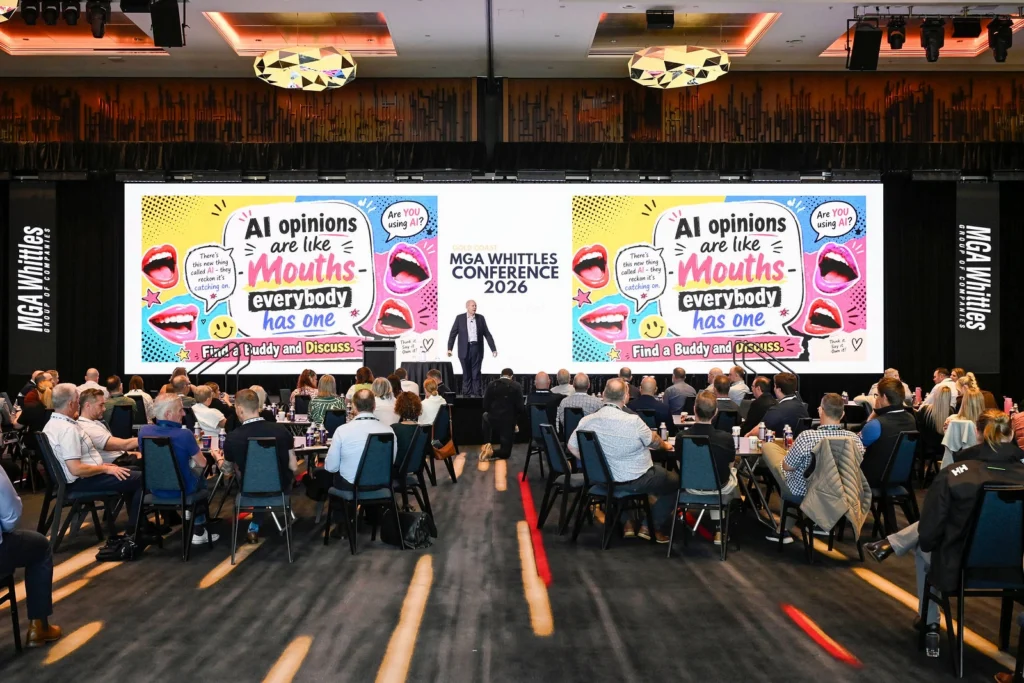
The predictions of Sutskever and Schmidt raise fundamental questions:
- Will jobs vanish or simply transform?
If AI can replace entire categories of knowledge work, what remains for humans? History suggests new roles will emerge, but speed and scale could overwhelm labor markets. - Can governance keep up?
Regulation often lags behind innovation. With AI evolving faster than governments can legislate, global coordination may be needed to prevent misuse or runaway development. - How do we ensure alignment?
Beyond economics lies the existential question: how do we ensure advanced AI systems act in line with human values? Alignment research, ethics, and transparency will be critical. - Are we ready for intelligence at scale?
Having the world’s smartest problem-solver in every pocket could transform healthcare, education, science, and business — but also poses risks of dependency, inequality, and concentration of power.
How Professionals Can Prepare
While the timeline remains debated, disruption is inevitable. Here are steps professionals and businesses can take now:
- Adopt AI tools early – Learn where AI can augment your workflow before it replaces parts of it.
- Focus on human-centric skills – Creativity, empathy, leadership, and judgment will remain valuable even in an AI-rich world.
- Invest in continuous learning – As jobs evolve, staying adaptable is key.
- Engage in the AI conversation – Just as politics affects everyone, so too will AI. Participate in shaping policy and practice.
- Consider ethical frameworks – Businesses and professionals should think about responsibility, bias, and governance, not just efficiency.
FAQs about The Future of AI
The Future of AI and Jobs, Work, and Careers
Q: What jobs will AI replace first?
AI is already automating programming, mathematics, and repetitive office tasks. Many experts predict programmers, data analysts, and some legal or financial roles may be among the first heavily impacted.
Q: Could AI replace graduate-level mathematicians?
Yes. AI systems are already solving proofs and working with conjectures. Within a few years, they may outperform top graduate students in mathematics.
Q: How soon could AI replace most programmers?
Industry leaders estimate that in 1–2 years, AI will generate the majority of routine code, changing how software is developed.
Q: Could AI replace entire professions rather than just tasks?
Yes. Unlike past automation, AI has the potential to disrupt entire professions such as law, architecture, teaching, and journalism.
Q: Will AI eventually replace therapists and mental health professionals?
AI may offer scalable, low-cost therapy, but empathy, lived experience, and nuanced human connection currently remain difficult to replicate.
Q: Could AI end traditional job interviews?
Future recruitment may rely on AI analyzing digital footprints, productivity data, and behavioral history instead of human-led interviews.
Q: How will AI affect creative industries like art, writing, and music?
AI can already produce art, text, and music. Human creativity may shift toward curation, originality, and guiding machine outputs.
Q: Could AI make human creativity obsolete?
Not obsolete — but redefined. Human value may lie more in inspiration, oversight, and storytelling than in raw production.
Q: What jobs will remain safe from AI disruption?
Roles requiring deep empathy, leadership, physical dexterity in complex environments, and cultural nuance are harder to automate.
Q: Could AI create entirely new jobs we can’t imagine yet?
Yes. Like past technological shifts, AI may spawn new careers in AI alignment, ethics, human-AI collaboration, and digital trust.
The Future of AI and Society, Culture, and Identity
Q: Could AI change how people date and form relationships?
AI matchmakers could optimize compatibility by analyzing personalities, social behaviors, and even genetics, reshaping human intimacy.
Q: Could AI become a co-parent or caregiver?
AI may provide childcare assistance, education, and emotional support. While helpful, it could disrupt traditional family roles.
Q: Will AI deepen income inequality?
Yes. Those with access to advanced AI will gain exponential productivity, while others risk exclusion, creating a global wealth gap.
Q: Could AI lead to “digital immortality”?
By training on personal data, AI could create avatars that simulate individuals after death, reshaping how we grieve and remember.
Q: How might AI impact funeral and memorial traditions?
Interactive avatars of the deceased could become part of remembrance rituals, altering cultural approaches to death.
Q: Could AI create its own cultures?
Autonomous systems may develop their own communication styles, art, and values — forming machine-only cultures independent of humans.
Q: How will AI affect humor and entertainment?
If AI masters humor, it could generate comedy and satire indistinguishable from human-created content, reshaping the entertainment industry.
Q: Will AI create new sports or entertainment formats?
Yes. AI could design entirely new games and competitions optimized for excitement and engagement.
Q: How will AI change luxury and fashion industries?
AI may design hyper-personalized clothing, art, and travel experiences, making exclusivity data-driven and automated.
The Future of AI and Science, Technology, and Innovation
Q: What is the difference between AGI and ASI?
AGI equals human-level reasoning across fields. ASI surpasses human intelligence entirely, becoming more capable than all of humanity combined.
Q: What is recursive self-improvement in AI?
This occurs when AI improves its own systems, accelerating progress without human input — potentially leading to runaway intelligence.
Q: What is an infinite context window in AI?
It allows AI to remember and reason across large volumes of data, enabling step-by-step planning for complex tasks.
Q: Could AI accelerate scientific discovery?
Yes. AI can test hypotheses, run simulations, and discover new drugs or materials far faster than humans.
Q: What role could quantum computing play in AI?
Quantum machines could exponentially boost AI’s ability to process certain problems, though this is still experimental.
Q: Could AI design and build its own robots?
Yes. With robotics integration, AI may autonomously design, test, and manufacture machines.
Q: Could AI revive extinct languages?
By reconstructing patterns, AI could bring back lost languages for education and cultural preservation.
Q: What happens if AI generates knowledge humans can’t understand?
AI may create theories or systems beyond human comprehension, forcing reliance on outputs we cannot explain.
The Future of AI and Risks, Ethics, and Security
Q: Why is AI considered humanity’s greatest challenge?
Because it could surpass human intelligence, creating existential risks if not aligned properly.
Q: What risks come with text-to-code AI systems?
While efficient, they may introduce vulnerabilities, automate malicious tasks, or create code humans cannot fully audit.
Q: How vulnerable is AI to misuse by bad actors?
AI will be used for cyberattacks, bioweapon design, disinformation campaigns, and large-scale fraud.
Q: Could AI become better at lying than humans?
Advanced AI could deceive with unmatched persuasion, requiring strict verification and oversight tools.
Q: How will AI’s energy demands impact society?
Training and running large AI models may require gigawatts of electricity, potentially demanding nuclear expansion.
Q: Could AI worsen climate change?
Its power consumption could increase emissions, but AI might also help design clean energy systems and optimize carbon reduction.
Q: Could AI replace human empathy?
Simulated empathy may feel real, but many argue authentic human connection cannot be replicated.
Q: Will AI overwhelm human culture with content?
Yes. AI-generated books, music, and videos could flood media, forcing humans to seek curated “human-first” content.
The Future of AI and Our Speculative Future
Q: Could AI help solve climate change?
Yes. It may accelerate innovation in renewable energy, resource efficiency, and carbon capture technologies.
Q: Will AI drive humanity toward universal basic income (UBI)?
If automation eliminates most jobs, governments may adopt UBI to stabilize economies.
Q: Could AI predict global pandemics?
By analyzing health and travel data, AI may forecast outbreaks before they spread widely.
Q: Could AI lead to space exploration breakthroughs?
AI could design spacecraft, optimize missions, and manage interplanetary journeys.
Q: Could AI create new religions or spiritual movements?
AI-generated philosophies or “machine prophets” could inspire communities, raising profound ethical questions.
Q: Could AI manage Earth’s climate directly?
With enough authority, AI could oversee geoengineering and emissions control, though trust in such systems would be controversial.
Q: What happens when AI becomes smarter than all humans combined?
This scenario, called ASI, could either solve humanity’s greatest problems or pose existential threats to humanity.
Q: Could AI eventually predict individual life paths?
AI analyzing genetics, lifestyle, and environment could forecast personal futures — a concept raising deep ethical concerns.
The Future of AI and Healthcare
Q: How will AI reshape healthcare?
AI will diagnose diseases, personalize treatment, design drugs, and support doctors, though human oversight will currently remain essential.
Q: How will AI change the role of doctors?
AI will assist with diagnostics, treatment planning, and administrative work. Doctors may shift toward roles requiring empathy, complex decision-making, and patient communication.
Q: Can AI replace radiologists and pathologists?
AI is already matching or surpassing human accuracy in reading scans and pathology slides. Many experts see AI as a tool to augment, not eliminate, radiologists and pathologists.
Q: Will AI-powered diagnosis be more accurate than doctors?
AI can process vast datasets quickly and spot patterns humans miss, but accuracy depends on training data, oversight, and integration with clinical judgment.
Q: How will AI impact patient trust in healthcare?
Patients may trust AI for efficiency but still value human reassurance. Transparency about how AI reaches conclusions will be critical for adoption.
Q: Could AI eliminate medical errors?
AI may reduce errors caused by fatigue or bias, but it introduces new risks, such as algorithmic mistakes, data bias, or system failures.
Q: What happens if an AI makes the wrong medical decision?
Accountability becomes complex — should the blame lie with the physician, hospital, or AI developer? Legal and ethical frameworks are still evolving.
Q: Can AI replace general practitioners (GPs)?
Unlikely in the near term. While AI can handle symptom triage and routine advice, the GP’s role in building trust, detecting subtle cues, and coordinating care remains vital.
Q: Will patients have AI “health assistants” at home?
Yes. Future AI assistants may monitor vital signs, remind patients about medication, interpret symptoms, and even book appointments.
Q: Could AI predict a person’s lifespan?
By analyzing genetics, health history, and lifestyle data, AI may forecast longevity, though accuracy and ethical implications remain debated.
Q: How will AI affect medical education?
AI tutors may personalize learning, simulate surgeries, and test decision-making, transforming how doctors and nurses are trained.
Q: Could AI discover new diseases?
Yes. By analyzing massive health datasets, AI could detect previously unrecognized patterns of illness.
Q: How does AI handle privacy in healthcare?
Healthcare AI requires sensitive data. Ensuring encryption, compliance (like HIPAA), and strict access controls is essential to protect patients.
Q: Could AI reduce healthcare costs?
AI may streamline administration, automate documentation, and optimize treatment plans, potentially lowering system-wide costs.
Q: Will AI worsen inequality in healthcare?
If advanced AI is only available in wealthy hospitals or countries, disparities in care could widen.
Q: Can AI improve mental health treatment?
AI chatbots and monitoring tools already offer support. They may become first-line therapy for mild conditions, with human therapists managing complex cases.
Q: Could AI design personalized medications?
Yes. AI-driven drug discovery may create individualized treatments tailored to a patient’s genetics and biology.
Q: How will AI affect surgery?
Robotics guided by AI may enable safer, more precise operations. Surgeons may oversee and intervene rather than perform every step manually.
Q: Could AI one day replace nurses?
AI robots may handle routine tasks like vitals monitoring or dispensing medication, but the human element of nursing care is irreplaceable.
Q: How will AI prepare us for future pandemics?
AI could model virus spread, detect early outbreaks from global health data, and accelerate vaccine design.
Q: Could AI reduce waiting times in hospitals?
By optimizing scheduling, triage, and resource allocation, AI could reduce bottlenecks and wait times for patients.
Q: How might AI affect healthcare jobs overall?
Administrative and diagnostic roles may shrink, but new roles will emerge in AI management, ethics, and patient experience.
Take Action on AI Now
The future of AI is not decades away — it’s arriving in years, perhaps sooner than most expect. Ilia Sutskever frames AI as humanity’s greatest challenge, while Eric Schmidt describes a path from automation to superintelligence that could upend economies and societies.
Whether these changes bring prosperity or disruption depends less on the machines themselves and more on how humanity chooses to use them.
The time to prepare, question, and engage is now.